
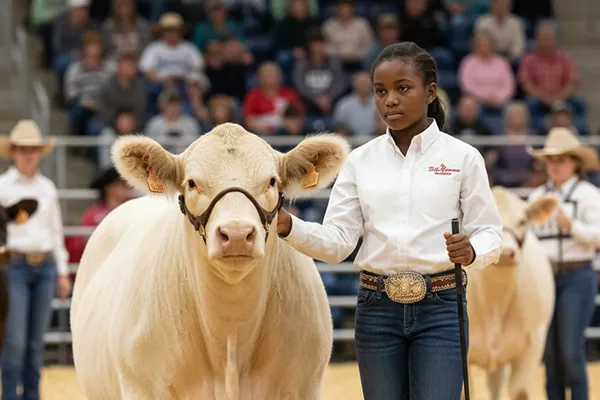
How Show Animals Can Teach Kids Responsibility
Raising show animals is about more than banners and buckles. For many families, it’s one of the most effective ways kids learn responsibility, not through lectures (although there will inevitably be a few), but through real, daily commitments.
So how do show animals actually teach responsibility? And why do so many parents, leaders, and educators say livestock projects prepare kids for life far beyond the show ring?
Responsibility Starts with Daily Care
Livestock don’t take days off.
From feeding and watering to cleaning pens and checking health, kids quickly learn that animals depend on them every single day. Unlike homework that can be postponed, livestock care demands consistency.
Kids learn:
Showing up on time
Following routines
Understanding that effort directly impacts results
These lessons stick because the responsibility is real, not theoretical.
Time Management Becomes Non-Negotiable
Between school, sports, and social activities, kids are busy. Add a show animal, and time management becomes essential.
Show projects teach kids to:
Plan chores around school schedules
Balance responsibilities instead of avoiding them
Prioritize tasks when time is limited
Parents often notice that kids with livestock projects develop stronger routines and better self-discipline than their peers.
Accountability Has Real Consequences
When kids forget a chore, the impact is immediate. Animals may lose condition, routines get disrupted, or progress slows.
Because the stakes involve animal welfare, kids learn responsibility in a way that’s meaningful and memorable.
Record-Keeping Builds Ownership
Responsibility isn’t just physical work; it’s mental organization.
Kids involved in show projects often learn to:
Track feed and weight changes
Log treatments and health notes
Keep up with show dates and deadlines
This kind of record-keeping helps kids understand the why behind results. It also introduces skills like organization, attention to detail, and long-term thinking, all of which translate beyond livestock.
Problem-Solving Becomes Second Nature
No livestock project goes perfectly.
Animals get sick. Schedules change. Shows don’t always go as planned. Sometimes your kid forgets to strap down the popper in the back of the truck and loses it on the freeway.
Through those challenges, kids learn to:
Adapt instead of panic
Think critically about solutions
Ask better questions
Show animals teach that responsibility isn’t about perfection, it’s about responding well when things don’t go right.
Confidence Grows Through Competence
As kids take ownership of their animals, something important happens: confidence grows.
That confidence comes from more than just winning, it comes from knowing they earned the result through consistent responsibility.
Lessons That Last Beyond the Ring
Parents often ask:
Are show animals really worth the time and effort?
What do kids actually learn from livestock projects?
The answer shows up years later.
Kids who raise show animals often carry forward:
Strong work ethic
Time management skills
Accountability
Respect for animals and responsibility
Those traits matter whether they stay in agriculture or not.
More Than a Project
Show animals are more than projects. They’re teachers, their friends, and more.
They teach kids that responsibility isn’t something you talk about, it’s something you practice, every day, with real consequences and real rewards.
And if you ask any graduated show kid, they'll tell you that the lessons learned may be the most valuable award they ever earned.